
Best eSIM for International Travel in 2026: Full Guide
Why eSIM Changed International Travel
Ten years ago, getting online abroad meant hunting for a SIM kiosk at the airport, swapping out your home SIM, and praying you didn't lose it in a hotel drawer. In 2026, that whole ritual feels ancient. eSIM technology lets you activate a local or regional data plan in under five minutes, straight from your phone, before you even board the plane.
If you travel more than twice a year, an eSIM is no longer a nice-to-have. It is the default. The question is no longer whether to use one, but which plan fits your route, your budget, and your data habits.
This guide breaks down what to look for in a travel eSIM in 2026, how to set one up, and a few traps to avoid.

What Is an eSIM and Why Use One Abroad?
An eSIM (embedded SIM) is a small chip already built into your phone. Instead of inserting a physical card, you scan a QR code or tap an install button, and a new mobile profile loads onto your device. You can keep your home number active for calls and texts while running a travel data plan in parallel.
The benefits abroad are easy to list:
- No roaming bills. Carriers like Verizon, EE, or Vodafone often charge 10 to 15 USD per day for roaming. Travel eSIMs drop that to a few dollars.
- Instant activation. No queues, no language barrier, no paper forms.
- Multiple plans at once. Hop between countries without swapping cards.
- Lower risk of theft or loss. Nothing physical to misplace.
The one catch: your phone must be eSIM-compatible and carrier-unlocked. Most iPhones from XS onward, recent Google Pixels, and Samsung Galaxy S20 and newer support it. If you bought your phone on a contract, double-check it is unlocked before you fly.
What to Look for in a Travel eSIM in 2026
Not every eSIM is equal. Some are great for a weekend in Paris, terrible for a month across Asia. Use this checklist:
1. Coverage Map
Check the exact countries included. "Europe" plans often skip Switzerland, the UK, or the Balkans. "Asia" plans may exclude China without a separate workaround. If your itinerary covers multiple regions, a global plan beats stitching together three regional ones.
2. Network Quality
The eSIM resells data from local carriers. A cheap plan that routes you onto a third-tier network will feel painful in cities with crowded towers. Look for plans that connect to established local networks.
3. Data Caps and Throttling
Some "unlimited" plans throttle to 512 Kbps after 1 GB per day. That is fine for maps, awful for video calls. Read the fine print.
4. Hotspot Support
If you travel with a laptop or share data with a partner, confirm tethering is allowed. Some plans disable it on cheaper tiers.
5. Top-up Flexibility
Can you add more data mid-trip without buying a whole new plan? In 2026, the better platforms let you buy another package for the same destination in a couple of taps.
What Makes a Good Travel eSIM Provider
The checklist above covers the plan itself. The provider behind it matters just as much. Before you hand over payment details, look for:
- Transparent pricing. The price on the package page should be the price you pay. No hidden activation fees, no surprise currency markups at checkout.
- Instant, reliable delivery. You should receive an installable QR code, or a direct install link on iPhone, seconds after purchase. Not "within 24 hours."
- A real account dashboard. Your eSIMs, purchase history, and package details in one place, so a mid-trip top-up takes a minute instead of a support ticket.
- Honest coverage lists. Country-by-country detail, not vague region labels.
SMSBulk eSIM: Travel Data Built Into a Verification Platform
Full transparency: SMSBulk is our platform, and the eSIM store is our own product. We built it to fix the annoyances above, and we recommend it openly as ours, not as a "sponsored pick."
- 200+ destinations. Local single-country packages, regional bundles, and global plans, all in one catalog.
- Transparent pricing. The price you see on the package card is what you pay from your account balance. No checkout surprises.
- Instant QR delivery and iOS direct install. The QR code appears in your dashboard seconds after purchase. On iPhone, a one-tap direct install skips the QR scan entirely.
- One account for data and verification. This is the part no one else offers: the same SMSBulk account that supplies your travel data also gives you virtual phone numbers from countries worldwide for receiving SMS verification codes. A data-only travel eSIM plus an SMSBulk virtual number covers everything a traveler's phone needs.
Browse the live catalog at SMSBulk eSIM. Already have an account? Your packages live in the eSIM dashboard.
Matching a Package to Your Route
Your best pick depends on where you are going. Quick guide, with every option available in the SMSBulk eSIM catalog:
- Europe (multi-country): a single regional Europe package covers dozens of countries on one eSIM. Far simpler than juggling per-country plans on a rail trip.
- Southeast Asia: a regional Asia package keeps the price per GB low across multi-country hops like Thailand, Vietnam, and Malaysia.
- Japan and South Korea: local single-country packages put you on top-tier networks at the best rate. Network quality matters most here.
- United States: local US packages with nationwide coverage handle everything from city breaks to road trips.
- Latin America, Africa, Middle East: coverage varies country by country. For mixed routes, a global package is usually the safest choice.
Pick the destination, compare package sizes, and you are installed in minutes.
How to Set Up Your Travel eSIM
The process takes about three minutes. Do it before you leave home, while you still have stable Wi-Fi.
- Buy the plan on the provider's website or app.
- Receive a QR code by email or directly in your dashboard.
- Open your phone settings. On iPhone: Settings, Cellular, Add eSIM. On Android: Settings, Network, Add SIM.
- Scan the QR code or tap the install button.
- Label the eSIM ("Japan trip" works) so you can find it later.
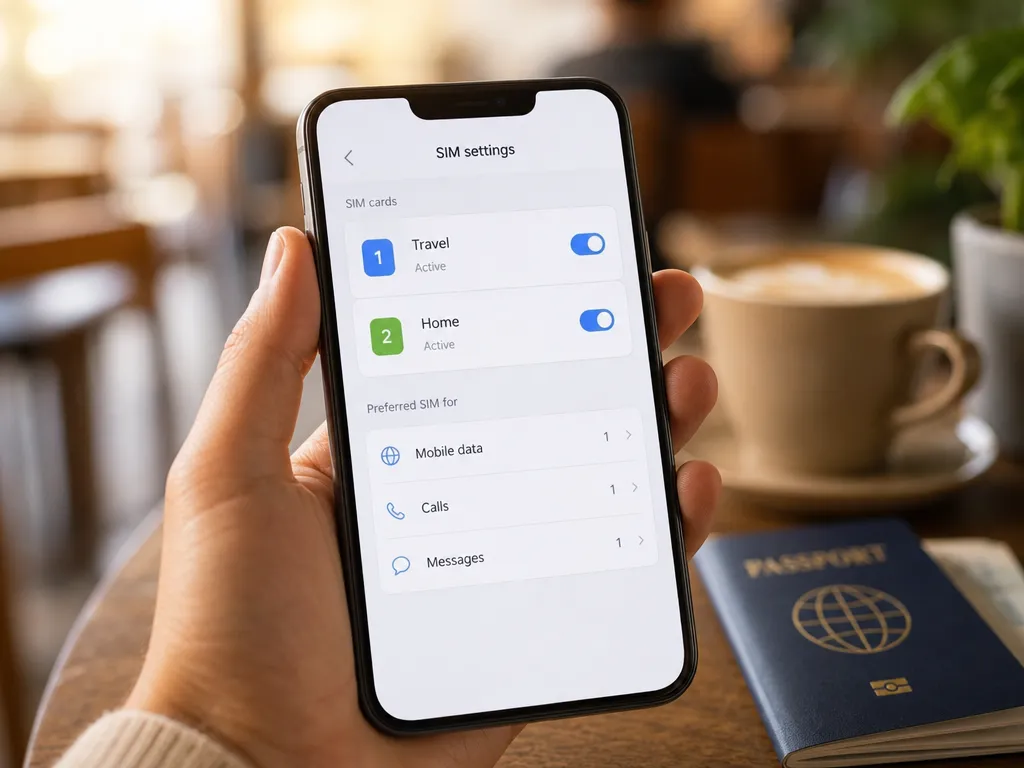
- Set data routing. Keep your home SIM for calls, route data through the travel eSIM.
- Turn off data roaming on the home SIM so you do not get charged accidentally.
Most plans activate on first network connection at your destination, not at purchase. That means the clock does not start until you actually land.
Combining eSIM With SMS Verification Services
Here is a scenario travelers hit constantly. You land in Tokyo, open a banking app or a delivery service, and it demands a verification code by SMS. Your travel eSIM is data-only. Your home number is roaming and either off or unreliable.
This is where a virtual number service helps. SMSBulk provides virtual phone numbers from countries worldwide that can receive verification codes from WhatsApp, Telegram, Google, Instagram, banking apps, and ride-hailing services. You pair your data-only travel eSIM with an SMSBulk number, and you can register or log into any service that asks for SMS confirmation, no matter what country you are in.
It is the missing piece for serious travelers who run on data-only eSIMs, and with SMSBulk both pieces live in the same account.
Common Mistakes Travelers Make
- Buying before checking compatibility. Confirm your phone supports eSIM and is unlocked.
- Activating too early. Some plans start counting validity from activation, not first use. Read the rules.
- Forgetting to disable home data roaming. Apps refresh in the background and your home carrier will charge you.
- Buying "unlimited" without checking throttle limits. A 1 GB daily fair-use cap is not real unlimited.
- Relying on one eSIM for a six-country trip. Sometimes two regional plans cost less than one global plan.
eSIM vs Physical SIM vs Pocket Wi-Fi
Each has a place:
- eSIM wins for solo travelers, short to medium trips, and anyone with a compatible phone.
- Physical SIM still makes sense in countries where local prepaid is dirt cheap and you stay long-term (3+ months).
- Pocket Wi-Fi suits groups or business travelers with multiple devices and no eSIM-ready phones.
In 2026, eSIM is the default for the majority of travelers. The exceptions are getting narrower every year.
FAQ
Can I use an eSIM and my regular SIM at the same time? Yes. Almost all eSIM-compatible phones support dual SIM standby, so your home number stays active for calls while the eSIM handles data.
Do eSIMs work on iPads and smartwatches? Many do, but travel eSIM plans usually target phones. Check the package details before buying.
What happens to the eSIM after my trip? It sits in your phone, inactive. You can delete it, or buy a new package for your next visit to the same destination.
Is an eSIM safe? Yes. Profiles are cryptographically signed by the carrier. They are not easier to clone than physical SIMs.
Get Started with SMSBulk
A travel eSIM gets you online. SMSBulk gets you both online and verified. Pick a data package for your destination at SMSBulk eSIM, pair it with a virtual number for receiving SMS codes from WhatsApp, Google, banking apps, and any other service that asks for verification, and travel without roaming bills or account lockouts. With 200+ destinations and virtual numbers worldwide on one platform, everything your trip needs is in a single account.
Ready to verify accounts the easy way?
Get instant SMS codes from 190+ countries in under 30 seconds.