
SMS Verification API with Provider Failover: Dev Guide

Why Verification Delivery Fails More Than You Think
SMS verification looks simple from the outside. A user enters a phone number, your backend requests a code, and the user types it back. In practice, delivery is one of the least reliable steps in any onboarding flow. Carriers throttle traffic. Routes go down. A number that worked an hour ago suddenly bounces because of a regional filter.
When a code never arrives, the user does not blame the carrier. They blame your product. They drop off. Studies on onboarding consistently show that every extra second of friction at signup costs conversions, and a missing verification code is the worst kind of friction because the user can do nothing about it.
The answer is not a single perfect provider. There is no such thing. The answer is provider failover: a system that detects a failed or slow delivery and automatically retries through a different route or vendor. This guide walks through the architecture, the retry logic, and concrete code you can adapt.
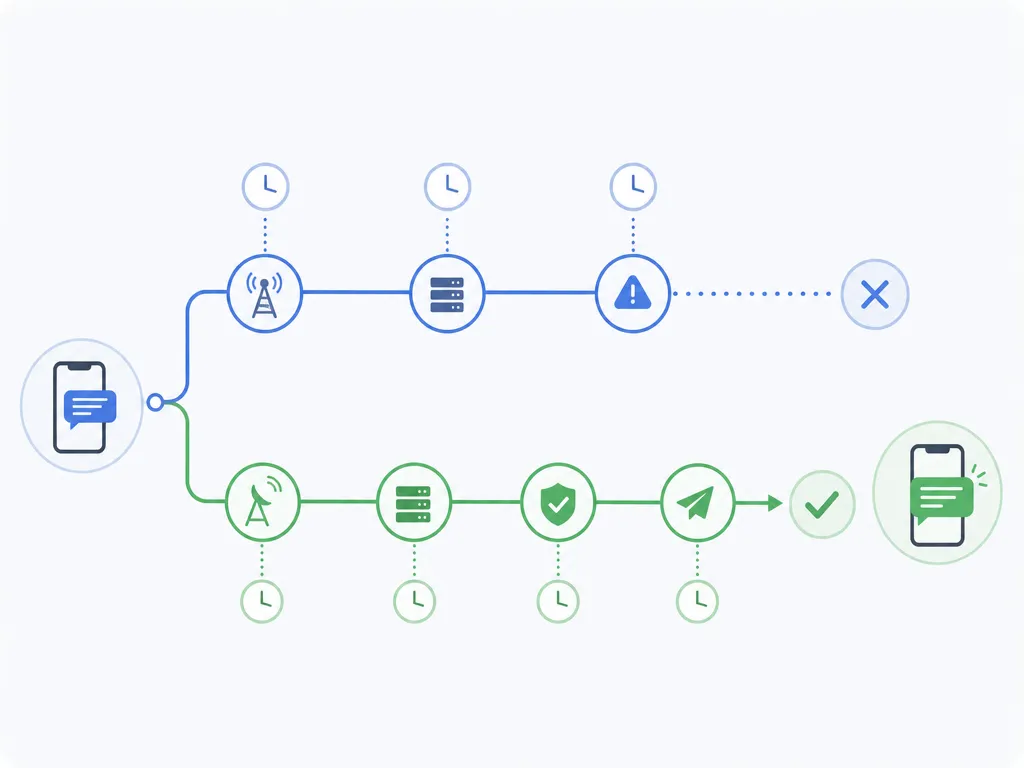
What Provider Failover Actually Means
Failover is the practice of switching to a backup path when the primary path fails. For SMS verification, that path can be:
- A different upstream provider (vendor A fails, vendor B takes over).
- A different route within one provider (premium route vs. standard route).
- A different channel (SMS fails, fall back to voice call or WhatsApp).
A mature setup uses all three. The key insight is that failover must be triggered by signals, not by guesswork. You need to know quickly whether a message was accepted, delivered, or silently dropped.
The three states you must track
- Submitted: the provider accepted your request.
- Delivered: the carrier confirmed handset delivery (via DLR, delivery receipt).
- Verified: the user actually entered the code.
Many teams only track the first state and assume success. That is the root cause of silent failures. A message can be submitted, never delivered, and you would never know without tracking the gap.
Core Architecture for Failover
Think of your verification service as a small state machine sitting between your app and one or more SMS providers. It owns the phone number, the generated code, the attempt history, and the timing.
Components you need
- A verification record stored in your database: phone number, hashed code, status, attempts, timestamps.
- A provider abstraction layer so every vendor speaks the same internal interface.
- A dispatcher that picks the next provider based on rules.
- A timeout watcher that triggers failover when a code is not verified within a window.
The provider abstraction is the most important piece. If your code calls each vendor's raw API directly, swapping providers becomes a rewrite. Instead, define one interface.
class SmsProvider:
    def send_code(self, phone: str, code: str) -> SendResult:
        raise NotImplementedError

    def check_status(self, message_id: str) -> DeliveryStatus:
        raise NotImplementedError
Every concrete provider (your primary vendor, your backup vendor) implements this. The dispatcher never knows or cares which vendor it is talking to.
Designing the Failover Logic
Failover decisions come down to two triggers: fast failure and slow failure.
Fast failure: the request was rejected
If a provider returns an error immediately (invalid number, no route, rate limit, auth error), you do not wait. You move to the next provider in your priority list right away. This path is synchronous and should add only milliseconds of latency.
def dispatch(phone, code, providers):
    for provider in providers:
        result = provider.send_code(phone, code)
        if result.accepted:
            return result  # submitted successfully
        log_failure(provider, result.error)
    raise AllProvidersFailed()
Slow failure: accepted but never delivered
This is the harder case. The provider accepted the message, but the carrier dropped it or delivery stalled. You cannot detect this synchronously. You need a timeout-based retry.
Set a delivery window, for example 25 to 40 seconds. If the user has not entered the code by then, and the delivery receipt has not confirmed handset arrival, resend through the next provider. Be careful here: do not generate a new code unless you must, because the original SMS may still arrive and confuse the user. A common pattern is to keep the same code valid and simply resend it through a healthier route.
Choosing the Provider Order
A static priority list is the simplest approach: always try provider A first, then B. It works, but it ignores reality. Provider A might be excellent in Germany and terrible in Indonesia.
Route by destination
The single biggest win is ordering providers per country. Maintain a routing table that maps a country code to a preferred provider order. Some vendors have strong direct routes to specific regions; others rely on aggregators. Match your order to where your users actually are.
Score providers dynamically
A more advanced approach scores each provider on a rolling window of recent performance:
- Delivery rate over the last hour.
- Median time to delivery.
- Verification completion rate (the truest signal).
Weight verification completion highest. A provider that delivers fast but to the wrong handset is useless. Demote any provider whose recent numbers drop below a threshold, then promote it back once it recovers.
This is exactly the kind of complexity that a platform handles for you. SMSBulk pools coverage across countries worldwide and routes requests through its own infrastructure, which means you can get verification numbers without building and maintaining a multi-vendor routing table yourself. You can explore the full SMS verification catalog to see country coverage before you commit to a build-versus-buy decision.
Idempotency and Avoiding Double Sends
Failover introduces a real risk: sending the same code twice, or charging the user's flow twice. Idempotency keys prevent this.
Generate one idempotency key per verification attempt and pass it through every layer. If a retry fires while the original request is still in flight, the key lets you detect and collapse the duplicate.
verification = {
    "id": "ver_8f2a",
    "phone": "+4915...",
    "code_hash": hash_code("482913"),
    "idempotency_key": "ver_8f2a-attempt-1",
    "status": "submitted",
    "attempts": [
        {"provider": "primary", "sent_at": 1718800000, "status": "no_dlr"}
    ]
}
Store every attempt inside the record. This history is gold for debugging and for the dynamic scoring described above.
Security Rules That Survive Failover
Resilience must never weaken security. A few non-negotiables:
- Hash the code at rest. Never store the plaintext OTP.
- Cap attempts. Three to five wrong guesses, then lock and force a new code.
- Expire codes. Five to ten minutes is standard.
- Rate limit per phone and per IP. Failover means more send paths, which attackers will probe. Throttle aggressively.
- Reuse the same code across retries during one window, so a resend through a backup provider does not multiply valid codes.
For a deeper look at how verification fits into account security overall, the virtual phone number guide covers the user-facing side of the same problem.
Channel Fallback: Beyond SMS
Sometimes SMS simply will not land. A corporate handset blocks shortcodes, a prepaid SIM has no route, a country filters foreign senders. Channel fallback gives you a second escape hatch.
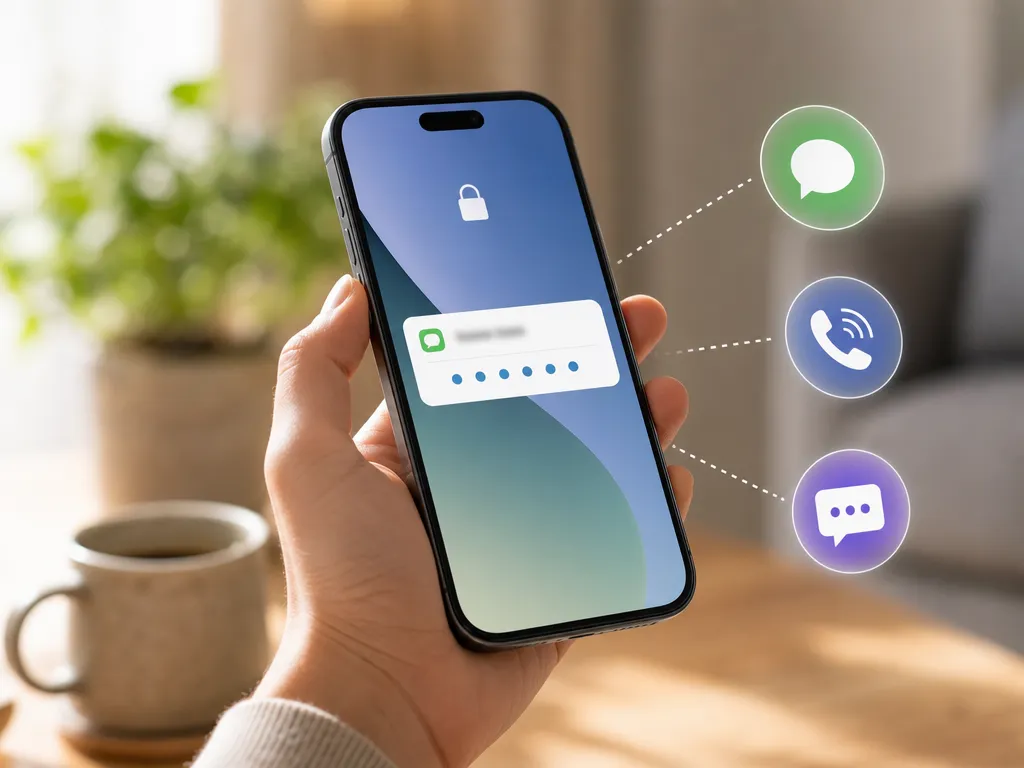
- Voice OTP. A text-to-speech call reads the code aloud. Slower, but it reaches numbers SMS cannot.
- Messaging apps. Delivering the code over a chat app can be more reliable in some regions.
Keep the priority sane. Try SMS first because it is cheapest and most familiar. Escalate to voice only after SMS failover has exhausted its providers. Expose the fallback to the user with a clear "Didn't get a code? Call me instead" button rather than switching channels silently.
Observability: You Cannot Fix What You Cannot See
Failover without metrics is just hope. Instrument everything.
Metrics that matter
- Submission success rate per provider, per country.
- Delivery rate (requires DLR ingestion).
- Time to verify: the duration from send to the user entering the code.
- Failover trigger count: how often the backup path kicks in.
- Cost per successful verification, not cost per message.
That last metric reframes the whole problem. A cheaper provider that forces three retries is more expensive than a pricier one that succeeds the first time. Always measure cost per success.
Set alerts on sudden drops. If a country's delivery rate falls off a cliff at 3 a.m., you want a page, not a surprise in next week's report. The same discipline applies whether you are verifying signups, logins, or phone verification for AI tools where bot-resistant onboarding matters even more.
A Reference Flow, End to End
Here is how the pieces fit together for a single verification:
- User submits phone number.
- Backend creates a verification record, generates a code, hashes it.
- Dispatcher picks the provider order for that country.
- Primary provider is called with an idempotency key.
- If rejected, fast failover to the next provider immediately.
- If accepted, start a timeout watcher (say 30 seconds).
- User enters the code. Backend compares the hash. Done.
- If the timeout fires first, resend the same code through the next provider.
- After N failed paths, offer voice fallback.
- Record every attempt for scoring and audit.
This flow handles both fast and slow failures, keeps the code consistent, and produces the data you need to improve routing over time.
Build It Yourself or Use a Platform?
Building multi-provider failover is rewarding and entirely doable. It is also ongoing work: contracts with multiple vendors, DLR ingestion, routing tables, scoring, and constant tuning as routes shift.
For many teams, the smarter move is to consume a single API that already pools providers and handles routing internally. That is what SMSBulk does. One API, one wallet, worldwide coverage, and the provider complexity stays on our side. You can read the technical reference in the developer documentation and check transparent rates on the pricing page before integrating.
If you operate globally and your users churn the moment a code is late, the build-versus-buy math usually favors a managed platform for verification, while you spend your engineering time on your actual product.
Common Mistakes to Avoid
- Trusting submission as success. Track delivery and verification, not just acceptance.
- Generating a new code on every retry. Keep one valid code per window.
- Global static routing. Route per country at minimum.
- No rate limits on the fallback path. Attackers love the path you forgot to harden.
- Measuring per-message cost instead of per-success cost. Optimize the metric that reflects reality.
Get Started with SMSBulk
Whether you build your own failover layer or skip straight to a managed solution, reliable delivery is the goal. SMSBulk gives you verification numbers across countries worldwide through one API and one wallet, with the routing complexity handled for you. The same account also covers email verification and travel eSIMs, so your verification, messaging, and connectivity needs live in one place. Create an account, top up your wallet, and ship resilient phone verification this week.
هل أنت مستعد للتحقق من الحسابات بسهولة؟
احصل على رموز SMS فورية من 190+ دولة في أقل من 30 ثانية.